
Crowns can be used to fix teeth that have been fractured, weakened by decay or have a very large fillings in them
What are inlays / onlays?
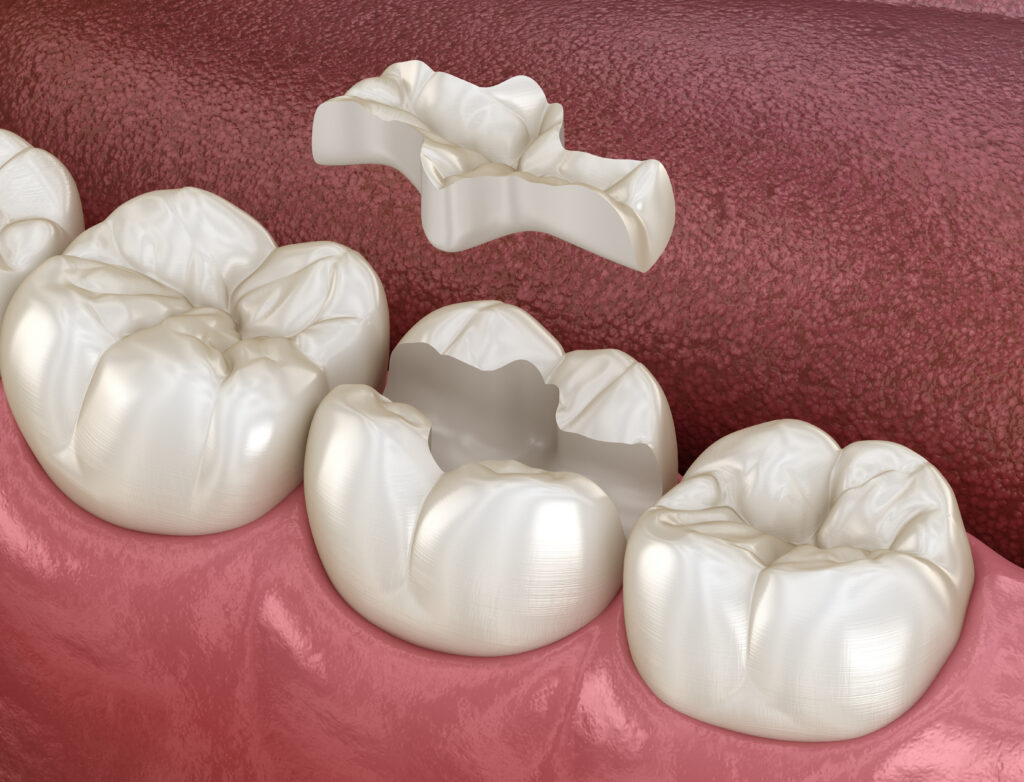
Inlays and onlays are two types of restorations that your dentist can suggest if you have a large cavity in your tooth that needs to be filled and a tooth coloured material is preferred.
Inlays fit into the cavity and involve only small alterations to accommodate them. They can be especially useful to help eliminate food trapping areas due to gaps in teeth caused by extensive decay.
An onlay covers a larger area of the tooth, and incorporates any parts of the tooth that might otherwise be vulnerable to fracture.

Benefits of inlays / onlays
Inlays and onlays help strengthen the tooth as they are bonded into place and hold the tooth together from the inside.
Inlays and onlays can be made in a dental laboratory by a technician, with the help of impressions taken of your teeth. While these are being made, you will have a temporary filling in place.
When your inlay or onlay is ready your dentist will glue it into place using a special dental adhesive.
FAQs
How long do inlays / onlays last?
Normally an inlay / onlay can last from 10 – 20 years. However particularly weak teeth, or patients who experience a lot of decay, may find they fail more quickly.
How are inlays / onlays fixed in?
Inlays and onlays are bonded to your teeth using special dental adhesives that are both strong and biocompatible.


